Why Choosing the Right Manufacturer Matters
Your contract manufacturer is more than a vendor, they're a strategic partner who directly impacts your product quality, delivery timelines, and bottom line. A poor choice can result in quality issues, missed deadlines, cost overruns, and damaged customer relationships.
Here are 10 essential questions to ask when evaluating potential contract manufacturing partners.
Question 1: What Are Your Core Capabilities?
Understanding a manufacturer's core capabilities ensures they can handle your specific production requirements. Key areas to explore:
- What manufacturing processes do you perform in-house?
- Do you offer both prototyping and production capabilities?
- What materials and technologies do you work with?
- Are you vertically integrated, or do you outsource certain processes?
Why it matters: A manufacturer whose core capabilities align with your product requirements will deliver better quality, shorter lead times, and lower costs.
Question 2: What Quality Management System Do You Use?
Understand the manufacturer's quality management approach. Ask to see their quality documentation and verify:
- They have documented quality processes
- Quality procedures are followed consistently
- Personnel are trained on quality standards
- Regular quality audits are conducted
Why it matters: A robust quality management system ensures documented processes, trained personnel, and systematic quality controls.
Question 3: What Is Your Quality Control Process?
Beyond certification, understand the specific quality controls in place:
- How do you inspect incoming materials?
- What in-process quality checks do you perform?
- How is final inspection conducted?
- What testing capabilities do you have?
- How do you handle non-conforming products?
Why it matters: Robust quality controls prevent defective products from reaching your customers.
Question 4: Do You Have Full Traceability?
Traceability is the ability to track every component and process step from raw material to finished product. Ask:
- Do you use an ERP system for production tracking?
- Can you provide traceability reports for each production lot?
- How do you manage component lot tracking?
Why it matters: Traceability is essential for regulatory compliance, warranty management, and root cause analysis when issues arise.
Question 5: What Is Your Typical Lead Time?
Understanding lead times helps you plan your production schedule and inventory:
- What is the lead time for prototypes?
- What is the lead time for production orders?
- How do you handle rush orders?
- What factors most commonly affect lead times?
Why it matters: Reliable lead times are critical for meeting your customers' delivery expectations.
Question 6: Can You Scale with My Business?
Your manufacturing needs may change as your business grows. Ensure your partner can scale:
- What is your current capacity utilization?
- Can you handle both small and large production runs?
- How quickly can you ramp up production volume?
- Do you have plans for capacity expansion?
Why it matters: Switching manufacturers is disruptive and expensive. Choose a partner who can grow with you.
Question 7: Do You Offer DFM Support?
Design for Manufacturing (DFM) support can significantly reduce your production costs:
- Do you provide DFM analysis for new products?
- Can your engineers collaborate with our design team?
- Do you offer BOM validation and optimization?
- Have you helped other clients reduce manufacturing costs through DFM?
Why it matters: DFM support demonstrates engineering capability and a commitment to optimizing your product for production.
Question 8: How Do You Protect Intellectual Property?
Your product designs and manufacturing processes are valuable intellectual property:
- Are you willing to sign an NDA?
- What physical and digital security measures protect customer IP?
- How do you control access to customer design files?
- Do you manufacture competing products?
Why it matters: IP protection is essential, especially for innovative products and proprietary designs.
Question 9: What Is Your Financial Stability?
A manufacturer's financial health affects their ability to invest in equipment, retain talent, and fulfill long-term commitments:
- How long have you been in business?
- Are you part of a larger organization?
- Have you made recent investments in equipment or facilities?
- Can you provide references from long-term customers?
Why it matters: A financially stable manufacturer is more likely to be a reliable long-term partner.
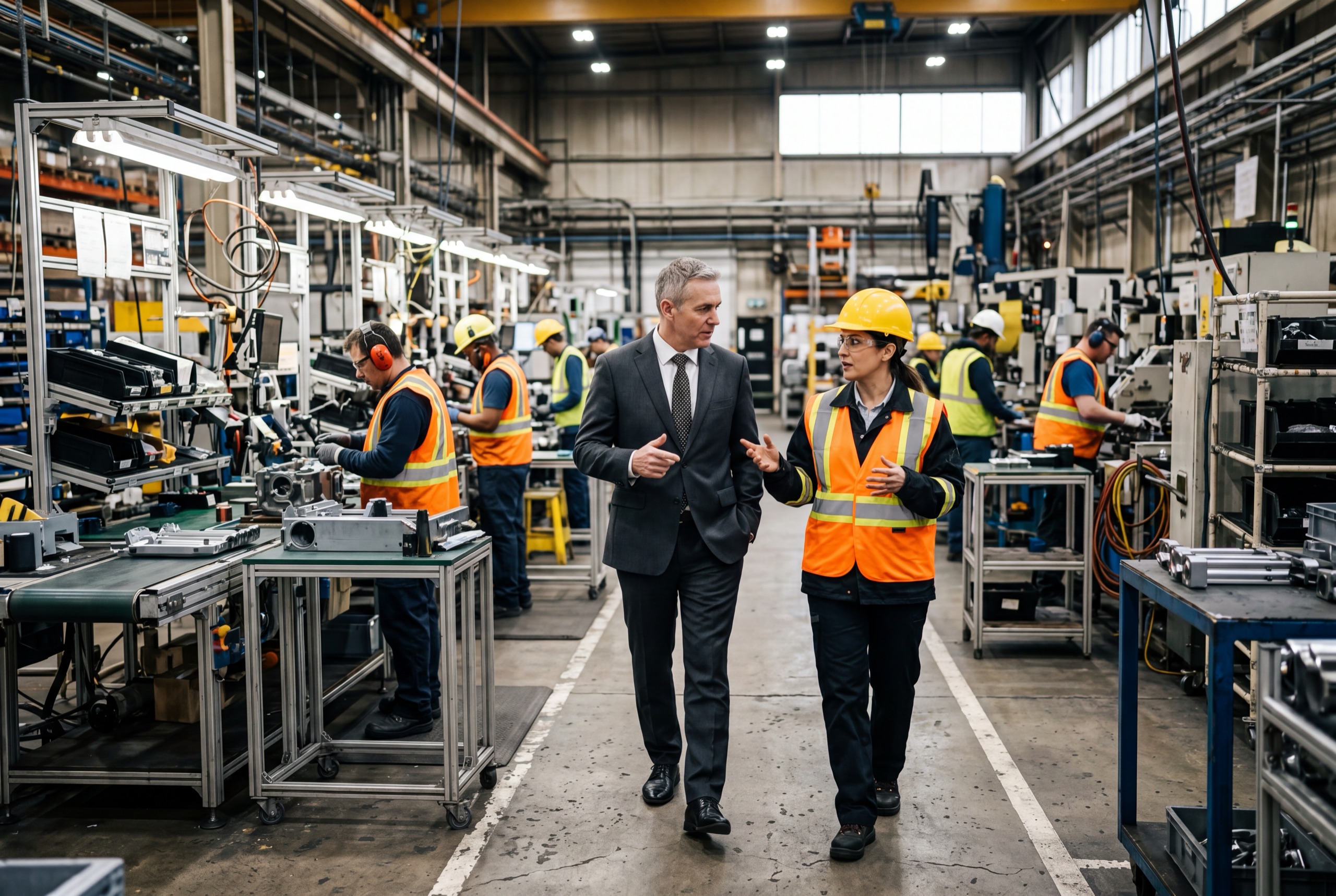
Question 10: Can I Visit Your Facility?
A facility visit reveals more than any sales presentation:
- Is the facility clean and well-organized?
- Is equipment well-maintained and modern?
- Do employees appear engaged and knowledgeable?
- Are quality processes visibly in practice?
- Is the facility appropriately sized for your production needs?
Why it matters: A facility visit gives you firsthand insight into the manufacturer's culture, capabilities, and commitment to quality.
Making Your Decision
After evaluating potential manufacturers against these 10 questions, create a weighted scorecard that prioritizes the factors most important to your specific project. Request quotes from your top candidates and compare not just price, but total value, including quality, lead time, DFM support, and long-term partnership potential.
Why Choose AAI
At Automated Assembly Inc., we welcome these questions because we're confident in our answers. Premium quality management, vertically integrated, with full ERP traceability and over 15 years of manufacturing experience, we're ready to be your trusted manufacturing partner.
Schedule a facility tour and see our capabilities firsthand. Contact us today.