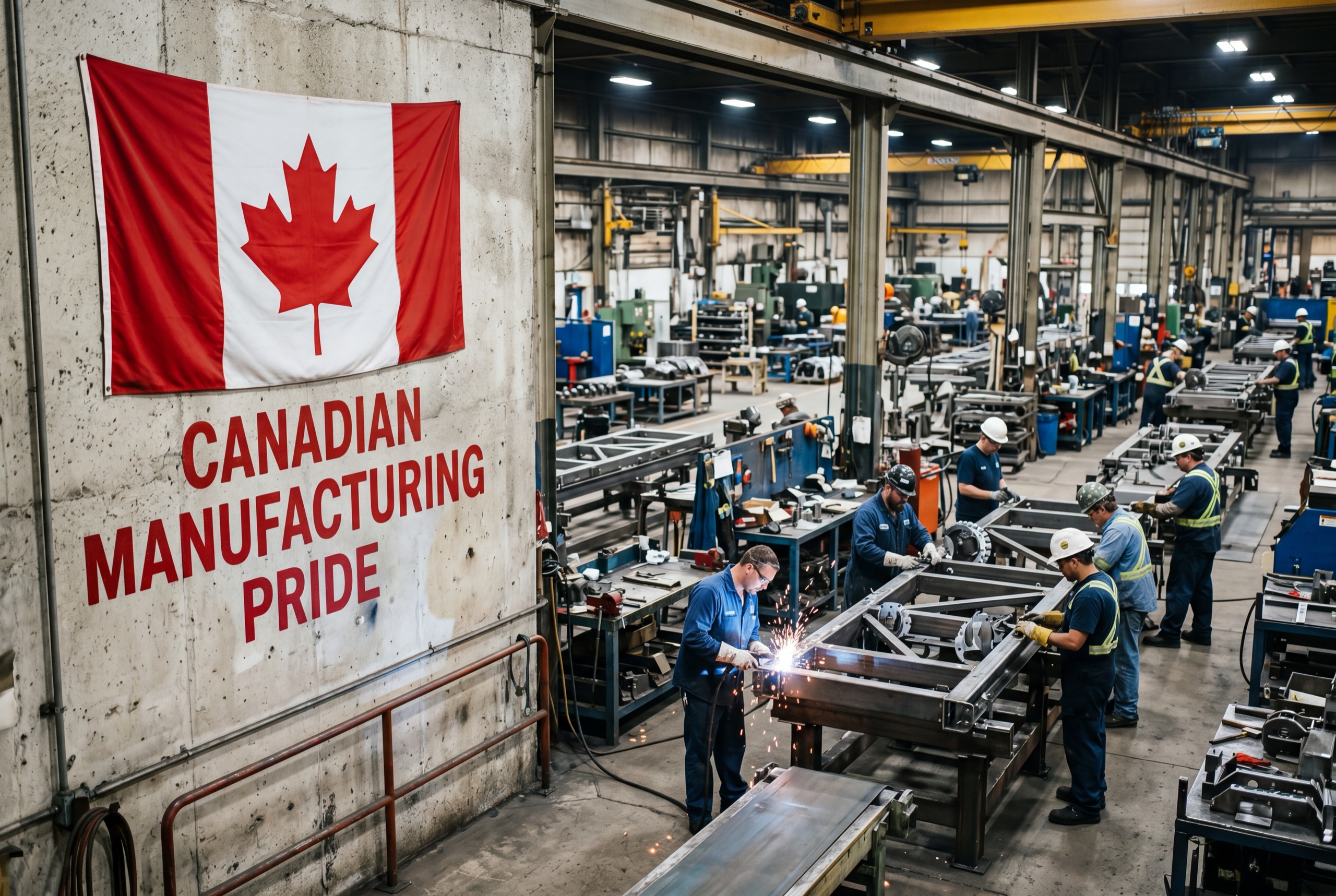
The Reshoring Movement
Reshoring, the practice of bringing manufacturing operations back to domestic or near-shore locations, has accelerated dramatically in recent years. Global supply chain disruptions, rising overseas shipping costs, quality concerns, and geopolitical uncertainties have prompted companies across North America to reconsider where their products are made.
Canada, and Ontario in particular, has emerged as a prime destination for reshored manufacturing operations.
Why Companies Are Reshoring to Canada
Supply Chain Resilience
The COVID-19 pandemic exposed the fragility of extended global supply chains. Companies that relied on overseas manufacturing faced months-long delays, shipping container shortages, and production shutdowns. Manufacturing in Canada provides shorter, more controllable supply chains.
Rising Overseas Costs
The cost advantage of overseas manufacturing has eroded significantly. When you factor in shipping costs, tariffs, quality issues, travel for oversight, intellectual property risks, and inventory carrying costs, the total cost of offshore manufacturing often exceeds domestic alternatives.
Quality Control
Maintaining quality standards across global supply chains is challenging. Language barriers, different quality cultures, and limited ability to conduct on-site inspections create risks. Canadian manufacturers operating under rigorous quality standards and best practices provide reliable, consistent quality.
Intellectual Property Protection
Canada has robust intellectual property laws and enforcement mechanisms. Manufacturing domestically significantly reduces the risk of IP theft, counterfeiting, and unauthorized production.
Speed to Market
Domestic manufacturing dramatically reduces lead times. Instead of 12-16 week ocean freight timelines, Canadian manufacturers can deliver in 4-8 weeks. This speed advantage is critical in competitive markets where time-to-market determines success.
CUSMA Trade Benefits
The Canada-United States-Mexico Agreement provides preferential trade access between the three countries. Products manufactured in Canada can enter the U.S. market with reduced or eliminated tariffs, making Canadian manufacturing cost-competitive for companies serving North American markets.
Ontario's Reshoring Advantages
Ontario offers specific advantages for companies considering reshoring:
Manufacturing Infrastructure: Ontario has the largest manufacturing sector in Canada, with established supply chains, skilled workforce, and supporting industries.
Proximity to U.S. Markets: Southern Ontario is within a day's drive of 60% of the U.S. manufacturing base and 40% of North American consumers.
Government Incentives: Federal and provincial programs support manufacturing investment, including the Strategic Innovation Fund, Ontario Made Manufacturing Investment Tax Credit, and various R&D tax credits.
Skilled Workforce: Ontario's education system produces thousands of engineering and skilled trades graduates annually, ensuring a reliable talent pipeline.
Competitive Costs: While Canadian manufacturing costs are higher than some overseas alternatives, they are competitive when total cost of ownership is considered, especially in Southwestern Ontario where operating costs are lower than the GTA.
How to Start Reshoring
Step 1: Total Cost Analysis
Calculate the true total cost of your current overseas manufacturing, including shipping, tariffs, quality costs, travel, inventory, and risk. Compare this with Canadian manufacturing quotes.
Step 2: Identify a Canadian Partner
Look for a contract manufacturer with the capabilities, certifications, and capacity to handle your production. Vertical integration is particularly valuable for reshored products, as it simplifies the transition.
Step 3: DFM Review
Have your Canadian manufacturer review your product design for manufacturing optimization. This is an opportunity to improve the product while transitioning production.
Step 4: Pilot Production
Start with a pilot production run to validate the manufacturing process, quality standards, and logistics before committing to full-scale production.
Step 5: Gradual Transition
Consider a phased transition, running parallel production during the changeover to ensure uninterrupted supply.
Partner with AAI for Reshoring
Automated Assembly Inc. has helped numerous companies successfully reshore their manufacturing to Canada. Our vertically integrated facility in Woodstock, Ontario provides complete capabilities from machining and fabrication to electromechanical assembly and testing.
Considering reshoring your manufacturing? Contact us for a free consultation and total cost analysis.