What Is Electromechanical Assembly?
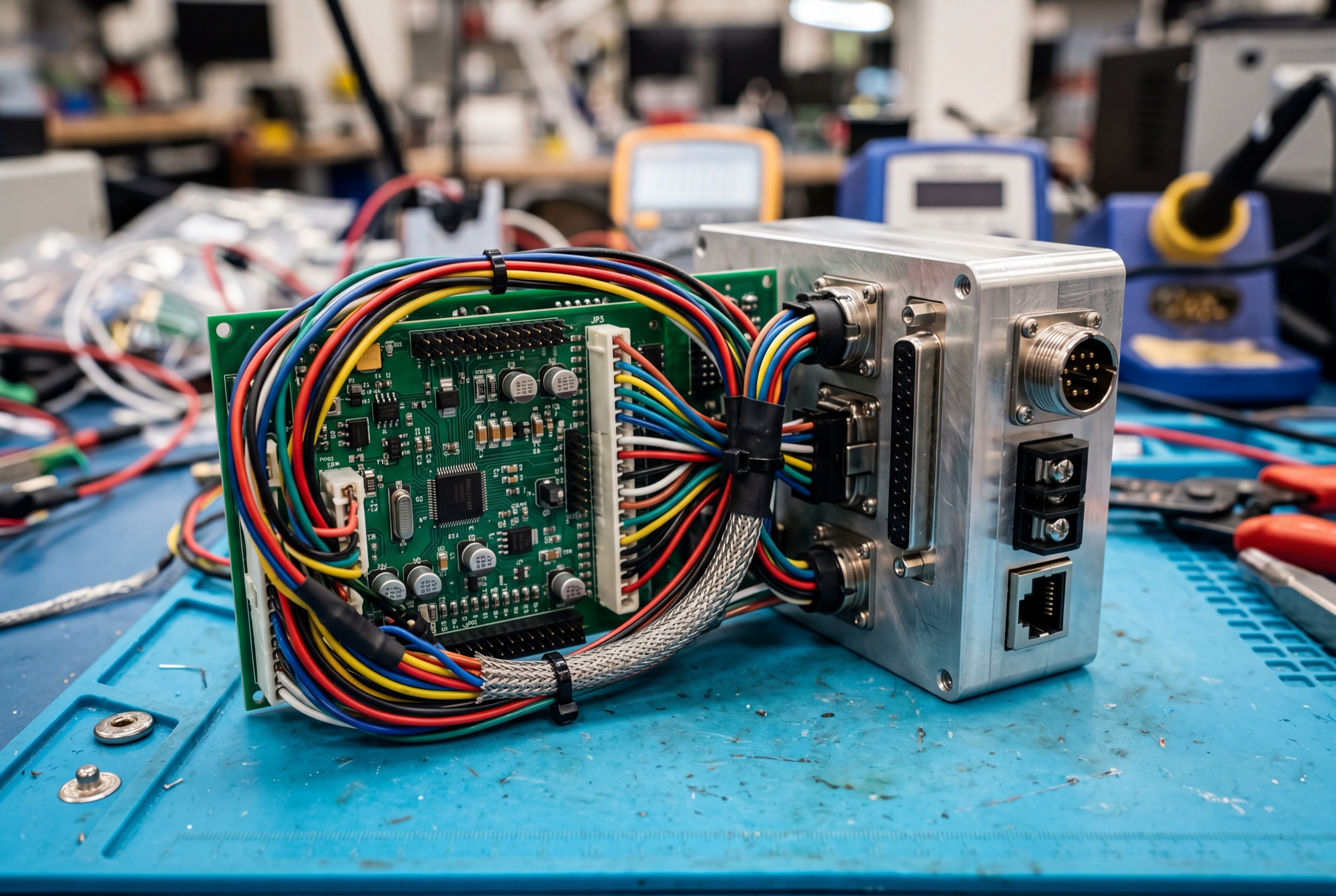
Electromechanical assembly is the process of integrating mechanical components with electronic systems to create functional products or sub-assemblies. This includes everything from simple switch-and-motor combinations to complex systems with PCBs, sensors, actuators, cable harnesses, and control electronics.
In today's manufacturing landscape, very few products are purely mechanical or purely electronic. Most modern products, from medical devices to industrial automation equipment, require the precise integration of both disciplines.
Types of Electromechanical Assembly
Box Builds
Complete enclosure assemblies that include mechanical housing, electronic components, wiring, and connectors. Box builds are common in industrial controls, medical devices, and telecommunications equipment.
Cable Harnesses and Wiring
Custom cable assemblies that route power and signals between components. Proper cable harnessing ensures reliable connections, easy serviceability, and compliance with safety standards.
PCB Integration
Mounting and connecting printed circuit boards within mechanical assemblies. This includes soldering, connector installation, and functional testing.
Panel Assemblies
Control panels and operator interfaces that combine switches, displays, indicators, and wiring within a structured enclosure.
System-Level Integration
Complete product assembly that brings together multiple sub-assemblies, mechanical structures, electronic systems, and software into a finished, tested product.
Why Quality Matters in Electromechanical Assembly
Quality in electromechanical assembly is not just about meeting specifications, it's about ensuring safety, reliability, and long-term performance. Here's why quality is critical:
Safety
Products that combine electrical and mechanical systems must be assembled correctly to prevent electrical hazards, mechanical failures, and safety risks. Improper wiring, inadequate grounding, or incorrect torque on fasteners can create dangerous conditions.
Reliability
Electronic components are sensitive to environmental factors like heat, vibration, and moisture. Proper assembly techniques, including correct wire routing, strain relief, and thermal management, ensure long-term reliability.
Regulatory Compliance
Many industries require electromechanical products to meet specific standards (CSA, UL, CE, FDA). Quality assembly processes ensure compliance with these requirements.
Cost of Failure
Field failures in electromechanical products are expensive to diagnose and repair. A quality-focused assembly process catches issues before products ship, avoiding warranty claims, recalls, and reputation damage.
Quality Standards for Electromechanical Assembly
Quality Management Systems
Robust quality management systems ensure that a manufacturer has documented processes, trained personnel, and continuous improvement practices in place.
IPC Standards
The IPC (Association Connecting Electronics Industries) publishes standards for electronic assembly, including IPC-A-610 for acceptability of electronic assemblies and IPC/WHMA-A-620 for cable and wire harness assemblies.
ERP Traceability
Modern quality systems use ERP (Enterprise Resource Planning) software to track every component, process step, and test result. This provides complete traceability from raw material to finished product.
Choosing an Electromechanical Assembly Partner
When selecting a contract manufacturer for electromechanical assembly, look for:
- Quality Management System, Essential for quality-critical assemblies
- Experienced Technicians, Skilled assemblers with training in both mechanical and electronic disciplines
- Testing Capabilities, Functional testing, load testing, and environmental testing
- Traceability Systems, ERP-based tracking for every component and process step
- Vertical Integration, In-house machining and fabrication capabilities reduce lead times and improve quality control
AAI's Electromechanical Assembly Capabilities
At Automated Assembly Inc., electromechanical assembly is our core competency. Our premium facility in Woodstock, Ontario provides:
- Complete box build assembly
- Custom cable harnessing and wiring
- PCB integration and soldering
- System-level integration and testing
- Full ERP traceability for every component
Combined with our vertically integrated machining and fabrication capabilities through JGW Machine, we offer a complete solution from raw material to tested, finished product.
Contact us to discuss your electromechanical assembly requirements.